
Chronic skin issues like eczema, psoriasis, acne, and rashes signal internal imbalance. Learn the root causes and the functional medicine approach to lasting skin health.
If you have spent years cycling through steroid creams, antibiotic prescriptions, harsh cleansers, and elimination diets that gave you partial relief at best, you are not imagining the pattern. The eczema patch on your inner elbow comes back every winter. The cystic acne returns on your jawline the week before your period. The psoriasis plaques flare during stressful months, then partly fade, then flare again somewhere new. You have probably been told this is just genetic, or that you will have to manage it forever, or that the next prescription strength will finally do the trick. What rarely gets discussed is that skin issues are almost always a symptom of something happening on the inside, not a standalone diagnosis.
This article looks at why eczema, psoriasis, acne, and chronic rashes are best understood as outward signals of internal imbalance, what the most common root drivers actually are, and how a functional and integrative medicine workup approaches the body as a connected system. The goal is not to dismiss conventional dermatology, which has its place. The goal is to give you a more complete framework so you can stop chasing flare-ups and start addressing the actual upstream causes. Integrative Wellness Centers has spent more than a decade helping patients in Michigan and across most of the United States do exactly that.
If you have been searching for answers and feel like topical treatments and shifting prescriptions have not addressed why your skin keeps flaring, you are not alone. Integrative Wellness Centers works with patients in person across Michigan and via Zoom in most US states to identify what is actually driving these symptoms. You can schedule a new patient consultation to discuss your specific situation with our care team.
Your skin is the largest organ in your body and one of the most metabolically active. It does not exist in isolation. It is connected to your immune system, your gut, your liver, your hormones, and your nervous system through a constant stream of biochemical signaling. When something is off internally, the skin is often one of the first places that imbalance becomes visible.
The numbers reflect just how widespread this issue is. Roughly one in three Americans deals with a skin disorder at any given time, and conditions like atopic dermatitis affect about ten percent of the adult population, with many cases starting in childhood and persisting for life. Eczema, psoriasis, acne, rosacea, and recurrent rashes are not rare. They are extremely common, and the conventional approach for most patients is symptom management rather than resolution.
That distinction matters because untreated internal drivers do not stay quiet. Patients who only suppress skin symptoms for years often go on to develop more obvious systemic issues later, including digestive dysfunction, autoimmune conditions, fatigue, and hormonal disorders. According to the Institute for Functional Medicine analysis of skin health, the appearance of the skin frequently signals underlying issues with the gut microbiome, immune regulation, nutrient status, and chronic inflammation. Skin is the messenger. The conversation should be about what the message means.
Before we look at root causes, it helps to be clear about what each of these conditions is and what they share. Although the surface appearance differs, the mechanisms behind eczema, psoriasis, acne, and chronic rashes overlap more than most people realize.
Eczema, also called atopic dermatitis, is a chronic inflammatory skin condition characterized by dry, itchy, red or discolored patches that flare in response to triggers. Cleveland Clinic describes eczema as a barrier-function disorder driven by immune dysregulation and environmental sensitivity, often beginning in childhood and persisting into adulthood.
Psoriasis is an autoimmune condition in which the immune system attacks healthy skin cells, accelerating turnover from the normal 28 days to as little as 3 to 4 days. The result is the thick, scaly plaques most people associate with the condition. Psoriasis is rarely just a skin issue. It is often linked with psoriatic arthritis, inflammatory bowel disease, and other systemic inflammatory conditions.
Acne, especially adult and cystic acne, is closely tied to hormonal balance, blood sugar regulation, and gut inflammation. Hormonal acne typically presents along the jawline, chin, and cheeks. Inflammatory acne with cysts and nodules often signals deeper imbalances in androgens, insulin signaling, or gut bacteria.
Chronic rashes, hives, and unexplained itchy patches frequently point to immune reactivity. They may be triggered by food sensitivities, environmental exposures, mast cell activation, or histamine intolerance. When standard allergy testing comes back unremarkable but symptoms persist, an internal driver is usually present.
Conventional dermatology is excellent at diagnosing what a skin condition is and prescribing treatments that suppress the immune or inflammatory response on the surface. Steroid creams reduce inflammation. Antibiotics kill bacteria. Retinoids reduce cell turnover. Immunosuppressants quiet the immune system globally. Each of these has a legitimate clinical role.
Where the model breaks down is in answering the question that most patients actually want answered, which is why this is happening to me in the first place. A topical steroid does not address why the immune system is overreacting. An oral antibiotic does not address the underlying gut imbalance that is driving inflammation. Suppressing a flare can buy short-term relief, but the upstream signal that produced the flare is still there. The condition tends to either return, migrate to a new area, or become more severe over time.
There is also a measurement gap. Standard dermatology workups rarely include the labs that would reveal the actual drivers, such as comprehensive stool analysis, food sensitivity panels, fasting insulin, full thyroid markers, micronutrient testing, or inflammatory markers beyond basic CRP. Without that picture, even the most experienced clinician is working blind on the systemic side. A growing body of peer-reviewed research on the gut-skin axis has documented direct, bidirectional connections between gut microbial composition and inflammatory skin conditions including psoriasis, eczema, and acne, yet this is still not standard in dermatologic evaluation.
None of this is an indictment of conventional care. It is simply a reminder that suppressing a downstream symptom is not the same as resolving an upstream cause. For chronic, recurrent skin issues, a more complete assessment is often what unlocks meaningful change.
Across the patients we see at Integrative Wellness Centers with persistent skin issues, a handful of root drivers come up again and again. Most patients have more than one operating at the same time, which is part of why isolated interventions like one elimination diet or one supplement rarely produce lasting results. The picture below outlines what we look for during a functional medicine workup.
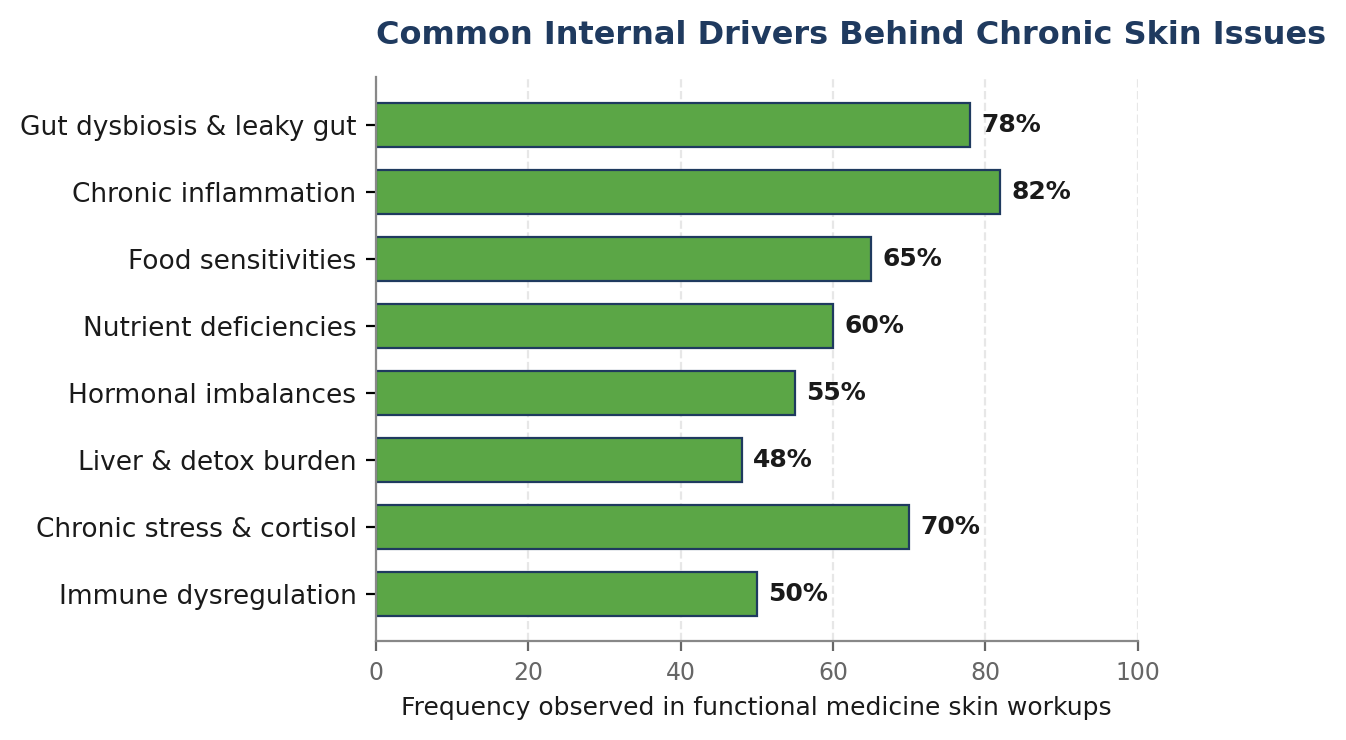
The connection between gut and skin is one of the most well documented relationships in functional medicine. When the balance of bacteria in the gut shifts toward inflammatory species, when the intestinal barrier becomes more permeable, or when small intestinal bacterial overgrowth develops, the immune system in the gut wall starts producing signals that affect the entire body. Roughly 70 percent of the immune system lives in and around the digestive tract, so dysfunction there ripples outward. Patients with stubborn acne, eczema, rosacea, and psoriasis very often have underlying digestive issues such as bloating, food sensitivities, irregular stools, or leaky gut, even when the digestive symptoms feel mild compared to the skin symptoms.
Skin conditions like psoriasis and eczema are, at their core, inflammatory diseases. The visible flare on the surface is the tail end of an inflammatory cascade that began somewhere upstream. The drivers of that inflammation might include high blood sugar, dietary triggers, infections, environmental toxins, sleep loss, or chronic stress. Suppressing inflammation locally with a cream is very different from lowering the systemic inflammatory load that keeps producing the next flare. When inflammation is brought down at the source, the skin tends to settle without aggressive topical intervention.
Food sensitivities are not the same as classical food allergies. They typically involve delayed immune responses that show up hours or days later, which makes them very hard to identify without structured testing or a careful elimination protocol. Common skin offenders include gluten, dairy, eggs, soy, corn, nightshades, and high-histamine foods. For some patients, a single high-reactive food is enough to keep eczema or hives in a low-grade flare for months. Identifying and removing those triggers, then later reintroducing strategically, is often a foundational step.
The skin needs specific nutrients to maintain its barrier, regulate inflammation, and complete the daily renewal cycle. Insufficient zinc impairs wound healing and barrier integrity. Low vitamin D is associated with worse outcomes in eczema and psoriasis. Omega-3 fatty acid deficiency drives inflammation. Vitamin A is essential for skin cell maturation. B vitamins, biotin, and selenium each have specific roles. Many patients with chronic skin issues are functionally deficient in one or more of these nutrients, often because of compromised digestion and absorption rather than poor diet. Lab testing is the only reliable way to know.
Acne is the most obvious example of a hormonally driven skin condition, but it is far from the only one. Excess androgens, estrogen dominance, insulin resistance, and elevated cortisol all show up on the skin in different ways. Cystic jawline acne in adult women is frequently a sign of PCOS or insulin dysregulation. Premenstrual breakouts point to estrogen-progesterone imbalance. Eczema can flare with thyroid dysfunction. Until the hormonal picture is assessed and addressed, even the cleanest topical regimen tends to disappoint.
The liver processes hormones, environmental toxins, medications, and metabolic byproducts. When that processing capacity gets overwhelmed, whether by exposures, alcohol use, certain medications, or impaired methylation, the body relies more heavily on backup elimination routes. The skin is one of those backup routes. While the simple narrative that the skin pushes out toxins is oversimplified, there are real connections between sluggish hepatic detoxification, hormone clearance, and skin inflammation. Supporting the liver appropriately, not with fad cleanses but with targeted nutritional support, often improves skin clarity.
Almost every patient with chronic skin issues will describe a clear link between stressful periods and flares. This is not psychological. It is biochemical. Sustained stress elevates cortisol, which over time impairs the skin barrier, increases inflammation, alters the gut microbiome, suppresses immune balance, and depletes nutrients. Nervous system regulation is not a soft variable in skin health. It is one of the foundational pillars that needs to be addressed alongside the rest.
Psoriasis is formally classified as an autoimmune condition, and many other skin conditions, including some forms of eczema and chronic urticaria, involve immune mechanisms that overlap with autoimmunity. When the immune system has lost the ability to distinguish self from threat, calming the surface response without addressing the upstream immune drivers leaves the patient cycling through flares indefinitely. Identifying and supporting the conditions that created the immune dysregulation, including gut health, viral or bacterial triggers, and nutrient status, is what allows the immune system to reset.
The two approaches are not mutually exclusive. There are situations where conventional dermatologic care is the right call, especially for acute flares or skin cancer concerns. The difference is in what each model is designed to do.
When a patient comes to Integrative Wellness Centers with chronic eczema, psoriasis, acne, or recurrent rashes, the goal of the first phase is not to write a prescription. The goal is to understand the body. That involves a thorough history, a careful conversation about symptoms, lifestyle, and timeline, and a series of advanced lab tests that build a clear picture of what is happening internally.
Our core workup typically includes more than 80 biomarkers in the foundational blood panel, plus targeted functional testing based on the presentation. For skin patients, that often includes comprehensive stool analysis to assess the gut microbiome and intestinal barrier, food sensitivity panels, fasting insulin and HbA1c to look at blood sugar regulation, full thyroid panels, sex hormone testing including DUTCH where appropriate, micronutrient analysis, and inflammatory markers. You can read more about our approach to advanced lab testing, which we consider the difference between testing and guessing.
Once the labs come back, care is built around what your specific body needs. Two patients with the same diagnosis of eczema may end up with very different care plans because the upstream drivers are different. One may need significant gut repair and food sensitivity work. Another may need hormonal balancing and stress regulation as the primary focus. Cookie-cutter protocols do not work well for chronic skin conditions, and the personalization is what makes the difference.
Almost every skin protocol includes structured nutrition work, targeted supplementation based on identified deficiencies, gut repair where indicated, sleep optimization, stress regulation practices, and exposure reduction for skin-irritating environmental factors. These are not generic wellness tips. They are protocol-level interventions chosen because the lab work shows they are needed.
Skin healing is rarely a single intervention. Most patients work through a 4 to 7 month care plan that includes follow-up labs, refinement of the protocol, and structured check-ins with our care team. We adjust as the body responds, and we keep monitoring until the patient is in a stable place rather than just symptomatically quieter. Care can be delivered in person at our Michigan clinic or via Zoom in most US states, which makes longitudinal monitoring feasible regardless of where you live.
Understanding the root cause of your skin issues starts with the right testing and a care team that takes the time to listen. Integrative Wellness Centers offers in-person care across Michigan and Zoom consultations for patients in most US states. If you are ready to stop guessing and start getting answers, you can book a consultation with our functional medicine team.
Realistic expectations matter. Most patients with chronic skin conditions did not develop them overnight, and the recovery process is not overnight either. What you can expect from a root-cause approach is a steady, layered improvement rather than a sudden cosmetic fix.
In the first one to two months, patients often notice changes in adjacent symptoms first. Digestion settles, energy improves, sleep deepens, mood evens out, and inflammatory markers start to drop. The skin frequently looks slightly worse in the first few weeks for some patients before it improves, as the body adjusts and inflammation patterns shift. This is normal and temporary.
Between months three and five, most patients see a meaningful reduction in flare frequency and severity. Eczema patches stay smaller. Psoriasis plaques thin out. Acne breakouts become less frequent and less inflammatory. Rashes become less reactive. Importantly, the body becomes less sensitive to the small triggers that previously set off major flares.
By month six or seven, many patients reach a place where the skin is stable, the underlying drivers are corrected, and the focus shifts to maintenance and prevention. The body is designed to repair itself when given the right conditions. Persistent skin issues are not a sign that the body is broken. They are a sign that the conditions have not yet supported repair. Once they do, skin tends to follow.
Chronic eczema, psoriasis, acne, and rashes are almost always skin issues as a symptom of internal imbalance, usually involving the gut, immune system, hormones, inflammation, or nutrient status. Topical treatments alone rarely produce lasting results because they suppress the flare without addressing the upstream drivers. A functional medicine workup uses advanced lab testing to identify those drivers and address them at the source, which is why many patients who plateau on conventional dermatologic care begin to see meaningful, durable change once the full internal picture is assessed.
If you have been searching for answers about chronic skin issues and feel like conventional approaches have not gotten to the root cause, you are not alone. Integrative Wellness Centers works with patients in person across Michigan and via Zoom in most US states to identify what is actually driving these sleep issues. You can schedule a new patient consultation to discuss your specific situation with our care team.
Patients ask these questions often, and the short answers below should give you a starting point. None of this is a substitute for a personalized evaluation, but it should help you decide whether a root-cause approach is worth exploring.
1. Are skin issues a sign of something internal wrong with the body?
In most cases of chronic or recurrent skin issues, yes. Acute and isolated skin problems can be purely surface level, but eczema, psoriasis, adult acne, rosacea, and unexplained rashes that persist or keep returning are typically downstream symptoms of internal drivers such as gut imbalance, inflammation, hormonal disruption, or immune dysregulation. The skin is one of the most visible places those imbalances show up.
2. What organ is most often linked to eczema and psoriasis?
The gut is the organ most consistently linked to chronic inflammatory skin conditions through what researchers call the gut-skin axis. The liver also plays a meaningful supportive role through hormone clearance and detoxification, and the immune system, much of which resides in the gut wall, is the connecting mechanism. Addressing gut health is usually one of the highest-leverage starting points for both eczema and psoriasis.
3. Can gut health really affect acne and other skin conditions?
Yes, and the evidence base for this has grown substantially in recent years. Gut dysbiosis, intestinal permeability, small intestinal bacterial overgrowth, and food sensitivities all influence the inflammatory and hormonal signals that produce skin symptoms. Many patients see significant improvements in acne, eczema, and rosacea once gut function is restored, often without any change in their topical regimen.
4. Why do my skin issues keep coming back after treatment?
Recurrence usually means the upstream driver has not been addressed. Topical and systemic medications can suppress a flare effectively, but if the gut, hormones, inflammation, or immune dysregulation that produced the flare is still present, the condition is likely to return once the medication is reduced or stopped. Identifying and correcting the actual drivers is what changes the recurrence pattern.
5. Is psoriasis actually an autoimmune disease?
Yes. Psoriasis is classified as an autoimmune condition in which the immune system inappropriately attacks healthy skin cells, accelerating their turnover. This is why psoriasis often runs alongside other autoimmune and inflammatory conditions, including psoriatic arthritis and inflammatory bowel disease. Supporting immune regulation rather than just suppressing the skin response is central to a root-cause approach.
6. Can functional medicine help with chronic eczema or stubborn acne?
Functional medicine is well suited to chronic skin conditions because it is designed to look at the upstream drivers that conventional dermatology typically does not assess. By using comprehensive lab work to identify gut, hormonal, nutrient, and immune contributors, and then addressing those, many patients experience meaningful improvement in conditions they have lived with for years. Results vary by individual and severity, but the approach is built for exactly these kinds of long-standing presentations.
7. How long does it take to see skin improvements with a root-cause approach?
Most patients begin noticing changes in adjacent symptoms within the first one to two months and visible skin improvements within three to five months. A typical care plan runs four to seven months, with ongoing monitoring and adjustment. The pace depends on how long the condition has been present, how many drivers are involved, and how consistently the plan is followed.
If this article resonated with what you have been going through, the next step is finding out whether functional medicine is the right fit for your situation. Integrative Wellness Centers has supported thousands of patients since 2012, both in person across Michigan and via Zoom in most US states. You can request a new patient consultation to start the conversation with our care team.
Medical Disclaimer: This article is for informational and educational purposes only. It is not intended as medical advice and should not replace consultation with a qualified healthcare provider. Integrative Wellness Centers makes no claims to diagnose, treat, cure, or prevent any disease. Always consult your doctor before making changes to your health regimen or discontinuing any medication.

Take the online digestive evaluation to instantly discover what systems of your body are the cause of your health issues.
Online Digestive EvaluationTake the TestOnline Female Hormone EvaluationOnline Male Hormone Evaluation


