
A root-cause guide to perimenopause symptoms in women over 35. Learn what is actually driving fatigue, mood shifts, sleep issues, and irregular cycles, and what helps.
You are tired in a way that sleep does not fix. Your period showed up nine days early, then disappeared for two months. You snapped at your spouse over something small, then cried in the car. Your jeans fit differently even though nothing in your routine has changed. You asked your doctor and were told your labs are normal, that you are "too young for menopause," and that it is probably stress. If any of that sounds familiar, you are most likely experiencing perimenopause symptoms, and they often begin a full decade before menopause itself. For many women, that means starting in their mid 30s.
This guide walks through what perimenopause actually is, why so many of its symptoms get missed or dismissed, the root causes that intensify them, and what a functional medicine workup looks for that a standard annual exam usually skips. Integrative Wellness Centers has worked with women navigating this transition since 2012, and the consistent pattern is the same: when the underlying drivers of hormone chaos are identified and supported, the symptoms become manageable, often dramatically so.
If you have been searching for answers about your perimenopause symptoms and feel like conventional approaches have not addressed the root cause, you are not alone. Integrative Wellness Centers works with patients in-person across Michigan and via Zoom in most US states to identify what is actually driving these symptoms. You can schedule a new patient consultation to discuss your specific situation with our care team.
Perimenopause is the multi-year hormonal transition that ends with menopause, defined clinically as twelve consecutive months without a menstrual period. According to the National Institute on Aging, this transition can last as long as fourteen years, and for some women begins in the late 30s. The reason that matters is simple: a 38 year old waking up at 3 a.m. drenched in sweat is rarely told that her hormones are the cause. She is told she is stressed, anemic, depressed, or pre-diabetic. She leaves with a sleep aid, an antidepressant, or a referral, but not an explanation.
The cost of missing the diagnosis is real. Untreated perimenopausal symptoms are linked to higher cardiovascular risk, accelerated bone loss, and meaningful cognitive complaints. A 2025 analysis of post-menopausal women published through the NIH National Library of Medicine found that brain fog, weight changes, and mood symptoms during perimenopause predicted measurable cognitive and behavioral changes years later. Beyond the physical, there is the daily wear of feeling unlike yourself in your own body, often during a decade when career, parenting, and caregiving demands peak. The symptoms are not "just hormones." They are signals that the whole system is shifting, and the response should be proportional to that.
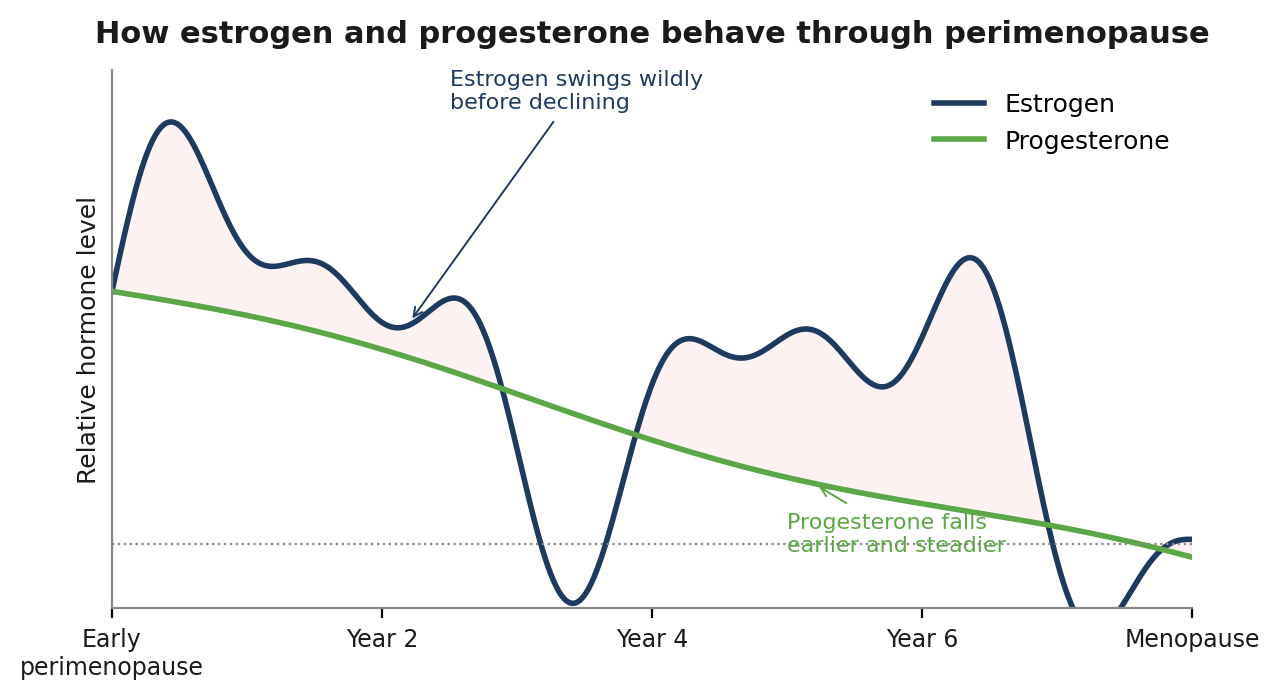
Perimenopause is the time leading up to menopause when the ovaries gradually produce less estrogen and progesterone, and they do so inconsistently. The Cleveland Clinic notes that perimenopause may begin as early as the mid 30s and can extend for several years. The average duration is around four years, but some women experience the transition for a decade or longer.
What makes it so hard to recognize is the sheer breadth of symptoms. Estrogen receptors exist throughout the body, in the brain, the gut, the skin, the heart, the bones, and the urinary tract. When estrogen production becomes erratic, every system that depends on it can feel the effect. That is why one woman has hot flashes and irregular periods while another has anxiety, joint pain, and a sudden inability to remember names. Both are perimenopausal. Neither is imagining it.
Search data shows the symptoms women look up most often track closely with what is documented in clinical literature. These are the patterns that show up the most:
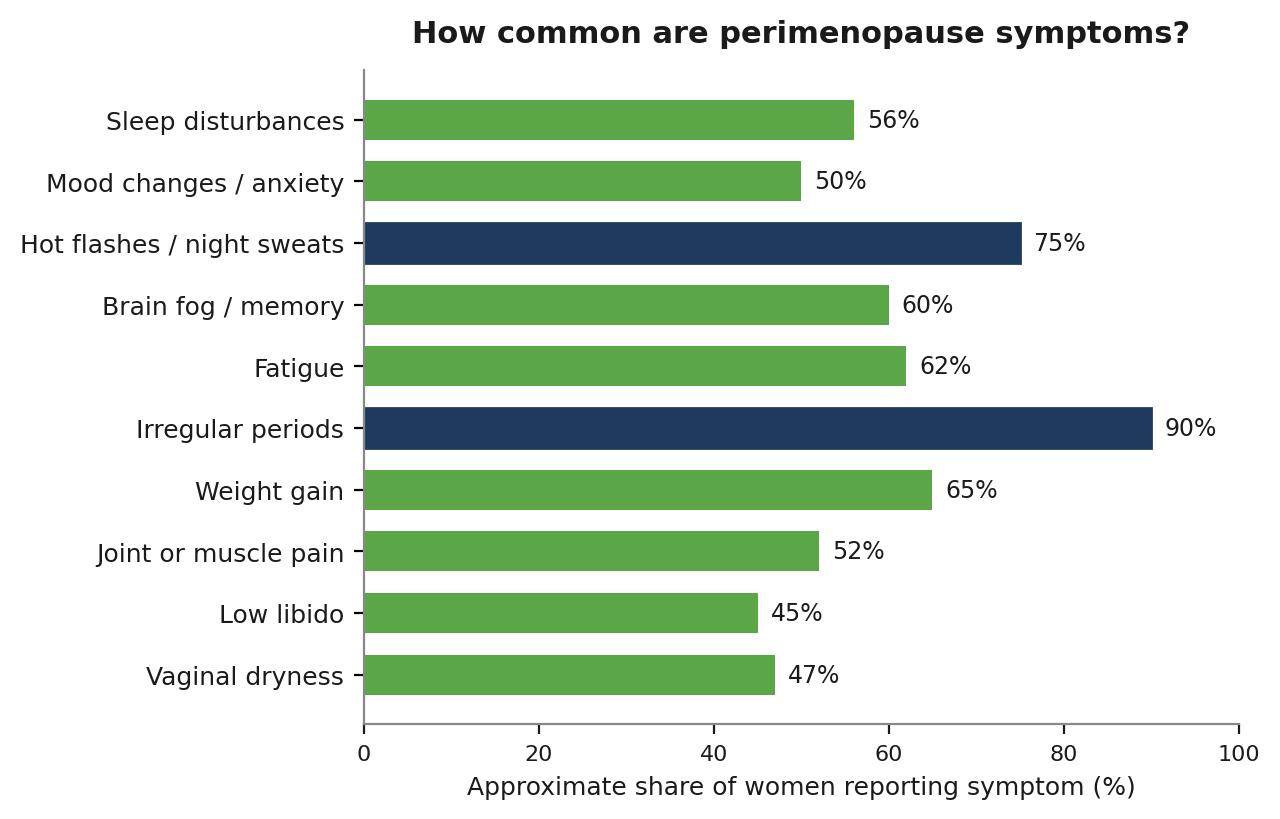
Many women search for "the 34 symptoms of perimenopause," a list that traces back to early menopause research. Today some clinicians count 36 or even more, including less obvious ones like ringing in the ears, body odor changes, dry mouth, electric-shock sensations, and burning tongue. The full list is long because the underlying hormonal shift touches almost every tissue.
Three things conspire to make perimenopause one of the most under-diagnosed transitions in women's health. The first is age bias. Most clinical training frames menopause as a "50s issue," so a woman in her late 30s or early 40s presenting with classic perimenopausal symptoms is often steered toward other diagnoses first. Anxiety, depression, hypothyroidism, anemia, and even fibromyalgia all get explored before perimenopause is mentioned.
The second is the limit of standard testing. A typical visit may include a TSH, a CBC, and sometimes a single FSH or estradiol level. The trouble is that perimenopausal hormones are wildly variable from day to day. FSH and estradiol can swing dramatically across a single cycle, so a normal-looking lab on a random Tuesday tells you very little. Yet that single normal result is often used to rule perimenopause out entirely.
The third is the gap between medical ranges and optimal ranges. A "normal" thyroid range, for example, is wide enough that you can sit at the bottom of it, feel exhausted and cold, and still be told nothing is wrong. The same applies to nutrient panels, sex hormone metabolites, and inflammatory markers. Functional medicine uses narrower, optimal ranges drawn from healthy populations, which is why women who keep being told their labs are fine often turn out to have several drivers that conventional ranges miss.
The two approaches are not in opposition. They are aimed at different layers of the problem.
Two women the same age can have wildly different perimenopausal experiences. One sails through with a few hot flashes and a slightly shorter cycle. Another spends three years in misery. The difference is rarely the hormones themselves. It is what else is going on underneath. These are the contributors functional medicine looks for.
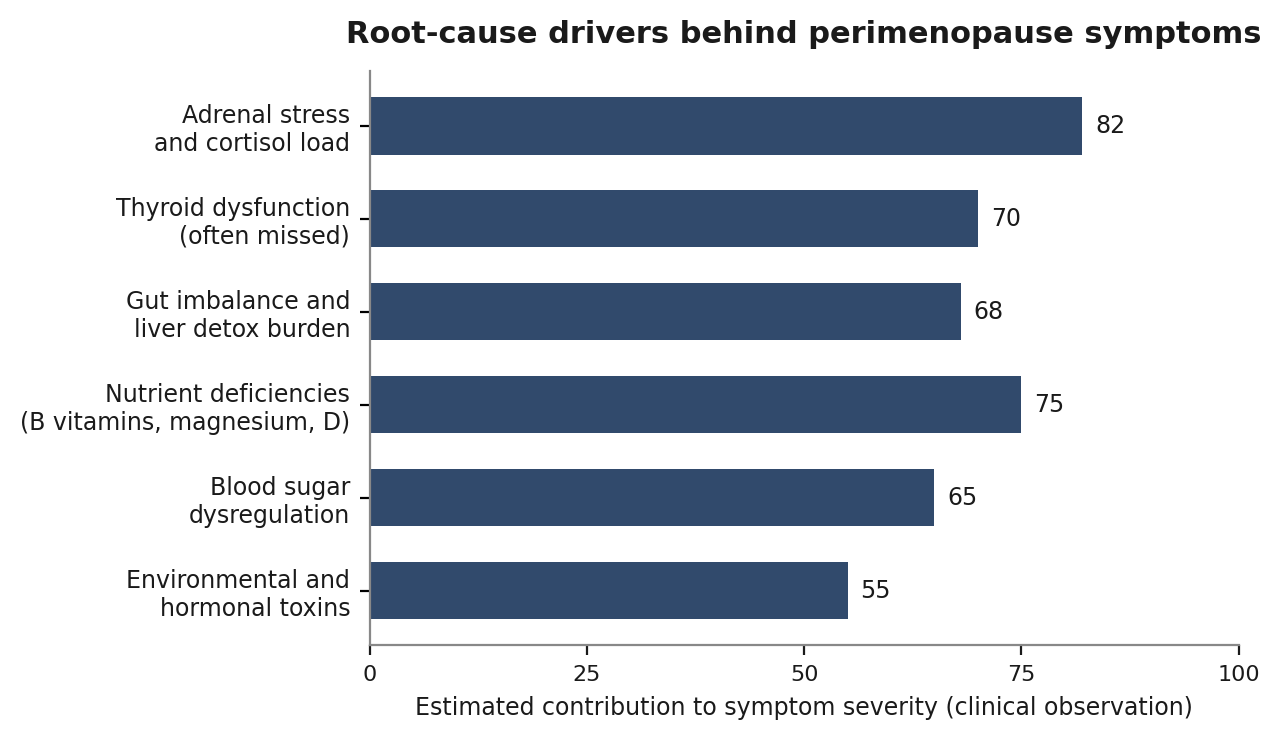
Your adrenal glands produce small amounts of estrogen and progesterone as ovarian production falls. When chronic stress, poor sleep, or under-eating have been depleting cortisol output for years, the adrenals cannot pick up the slack. That is when night sweats, 3 a.m. wake-ups, and that wired-but-tired feeling get worse. Saliva or urinary cortisol mapping across the day shows the actual pattern, not just whether you are "in range."
Thyroid hormone and estrogen interact constantly. Falling estrogen affects how thyroid hormone is used, and a sluggish thyroid worsens almost every perimenopausal complaint, including fatigue, weight gain, hair thinning, and brain fog. A full thyroid panel includes TSH, free T4, free T3, reverse T3, and thyroid antibodies. Most standard visits only check TSH, which is why women with clear thyroid issues often go years without a diagnosis. We discuss this in more depth in our resource on thyroid health and root-cause care.
Estrogen is metabolized in the liver and excreted through the gut. If the gut microbiome is imbalanced or constipation is present, estrogen gets reabsorbed instead of cleared, intensifying the hormone fluctuation. Bloating, food sensitivities, and irregular bowel habits in perimenopausal women are not coincidence. A GI-MAP stool analysis can identify whether estrogen recirculation is part of the picture.
Magnesium, B vitamins, vitamin D, iron, and omega-3 fatty acids are all involved in hormone production, mood regulation, sleep, and cardiovascular health. Decades of low intake, restrictive dieting, or poor absorption show up exactly when the body needs these nutrients most. A comprehensive nutrient panel often reveals deficiencies that explain symptoms long blamed on "just hormones."
Estrogen helps cells respond to insulin. As estrogen falls, insulin sensitivity often falls with it, producing the famous "perimenopause belly," sugar cravings, and afternoon energy crashes. Fasting insulin, hemoglobin A1c, and a metabolic panel together show whether blood sugar is part of the problem. This is often the most fixable driver and the one most likely to make the rest of the symptoms easier.
Endocrine-disrupting chemicals from plastics, personal care products, household cleaners, and certain pesticides can mimic or block estrogen in the body. The toxin load alone is rarely the entire problem, but it adds to it. Reducing exposure and supporting liver detoxification pathways is part of a full plan, not a substitute for it.
Understanding the root cause of your perimenopause symptoms starts with the right testing and a care team that takes the time to listen. Integrative Wellness Centers offers in-person care across Michigan and Zoom consultations for patients in most US states. If you are ready to stop guessing and start getting answers, you can book a consultation with our functional medicine team.
A functional medicine workup for perimenopause is built on the assumption that symptoms have causes worth identifying, even when the diagnosis is "natural and normal." The work is to figure out which of the contributors above is actually driving each woman's experience, and to address those specifically rather than handing every patient the same prescription.
Because estrogen and FSH swing dramatically across a perimenopausal cycle, a single blood draw rarely tells the full story. A comprehensive workup may include a Functional Blood Chemistry panel evaluating dozens of markers across thyroid, adrenal, metabolic, inflammatory, nutrient, and liver function. Depending on the symptom picture, that gets paired with a DUTCH hormone panel for sex hormone metabolism, a GI-MAP for gut health, or specific nutrient testing. The principle is the same one we apply to advanced lab testing across all chronic concerns: test first, do not guess.
Two women with similar perimenopause symptoms can end up with very different care plans. One may need targeted nutrient repletion and adrenal support. Another may need to address gut imbalance and blood sugar first, with hormone support added later. Some women benefit from bioidentical hormone therapy, others do well without it. The plan is built from the lab data and the patient's priorities, not from a one-size template.
No supplement protocol replaces sleep, protein, strength training, and stress regulation in this season of life. Perimenopause is when the body becomes far less forgiving of skipped meals, late nights, and chronic over-scheduling. A care plan walks through what to change, what to keep, and which lifestyle inputs will move the needle most for that specific person. The Mayo Clinic's overview of perimenopause management echoes this point: lifestyle change is foundational, and medication adds on top of it rather than replacing it.
Perimenopause is a moving target. Hormones shift quarter to quarter, and what worked at month three may need to be adjusted by month six. Ongoing follow-up appointments, retesting at intervals, and refining the plan are part of the process. This is also why we frame care in 4 to 7 month plans rather than single visits.
Women who address perimenopause symptoms with a root-cause approach generally see meaningful change within the first two to three months, with larger improvements often arriving between months four and six. The exact pattern depends on which drivers were involved. When blood sugar and adrenal load are the main issues, energy and sleep typically improve first. When the gut and detox pathways need work, mood and skin clear up alongside cycle regularity. Hot flashes often start to dial down once estrogen metabolism is supported, even before any hormone therapy is considered.
Realistic expectations matter. The goal is not to "turn off" perimenopause. It is to move through it with stable energy, sleep, mood, and weight, and to enter menopause with a body that has been well supported rather than worn down. The body is designed to be self-healing and self-regulating when given the right inputs, and most women report feeling more like themselves than they have in years, sometimes ever.
Perimenopause symptoms often begin in the mid 30s and get dismissed because standard testing misses what is actually driving them. The hormone shift itself is normal, but how severely it shows up depends on adrenal load, thyroid function, gut health, blood sugar, and nutrient status, which a functional medicine workup evaluates in depth. When those root causes are identified and supported, most women see meaningful improvement in energy, sleep, mood, and weight within a few months.
If you have been searching for answers for perimenopausal symptoms and feel like conventional approaches have not gotten to the root cause, you are not alone. Integrative Wellness Centers works with patients in person across Michigan and via Zoom in most US states to identify what is actually driving these sleep issues. You can schedule a new patient consultation to discuss your specific situation with our care team.
These are the questions women most often search after reading about perimenopause symptoms, drawn from real search patterns and the patterns we see in consultations.
1. Can perimenopause symptoms really start at 35?
Yes, and more often than most women are told. The Cleveland Clinic and Mayo Clinic both note that perimenopause can begin in the mid 30s, even if menopause itself is still ten or more years away. If you are 35 and noticing irregular cycles, new sleep issues, or unexpected mood and energy changes, perimenopause is worth investigating, not ruling out because of age.
2. Can perimenopause cause nausea, dizziness, or heart palpitations?
It can. Estrogen affects the gut, the vestibular system, and the cardiovascular system, so unexplained nausea, dizziness, and a fluttering or racing heart are all reported during perimenopause. These symptoms always deserve a workup to rule out other causes first, but when the rest of the picture fits, perimenopause is often part of the story.
3. How long do perimenopause symptoms last?
Perimenopause itself averages about four years according to NIH data, but can range from a few months to fourteen years. Specific symptoms like hot flashes can persist into early postmenopause for some women. A targeted plan usually makes the experience much shorter and milder, even when the transition itself runs long.
4. What is the difference between perimenopause and menopause?
Perimenopause is the transition leading up to menopause, when hormones are fluctuating but periods are still happening, even if irregularly. Menopause is the single point when you have gone twelve full months without a menstrual period. Everything after that point is postmenopause. Most symptoms women associate with menopause actually begin in perimenopause.
5. Can you get pregnant during perimenopause?
Yes. Ovulation still happens during perimenopause, just less predictably. Contraception is still needed if pregnancy is not the goal, generally until twelve consecutive months without a period have passed. Talk to your healthcare provider about which method makes sense given your age and symptom picture.
6. What is the best testing for perimenopause symptoms?
A single blood draw is rarely enough because hormones fluctuate so much during this phase. A comprehensive workup typically includes a full thyroid panel, fasting insulin and metabolic markers, nutrient status, and depending on symptoms, a DUTCH hormone panel that maps estrogen metabolites across the day, or stool testing to evaluate the gut-hormone connection. The goal is to identify which drivers are amplifying your symptoms, not just confirm the transition itself.
7. Do I have to take hormone replacement therapy for perimenopause?
No. Hormone therapy is one tool among many, and it can be very helpful for some women, especially with severe vasomotor symptoms or significant quality-of-life impact. Many women improve substantially through nutrition, targeted supplementation, blood sugar and adrenal support, and lifestyle change alone. The right answer depends on your specific labs, symptoms, history, and preferences, not on a default protocol.
If this article resonated with what you have been going through, the next step is finding out whether functional medicine is the right fit for your situation. Integrative Wellness Centers has supported thousands of patients since 2012, both in-person across Michigan and via Zoom in most US states. You can request a new patient consultation to start the conversation with our care team.
Medical Disclaimer: This article is for informational and educational purposes only. It is not intended as medical advice and should not replace consultation with a qualified healthcare provider. Integrative Wellness Centers makes no claims to diagnose, treat, cure, or prevent any disease. Always consult your doctor before making changes to your health regimen or discontinuing any medication.

Take the online digestive evaluation to instantly discover what systems of your body are the cause of your health issues.
Online Digestive EvaluationTake the TestOnline Female Hormone EvaluationOnline Male Hormone Evaluation


