
A functional endocrinologist in Michigan uses advanced testing and optimal ranges to find the root cause of thyroid, adrenal, and hormone symptoms. In-person and Zoom care.
You have been told your labs are normal, yet something is clearly off. Your energy is gone by mid-afternoon, your weight is creeping up despite the same routine, your hair is thinning, your cycles are unpredictable, and your mood feels less like yours every month. A conventional endocrinologist looks at your TSH, glances at a number inside the lab reference range, and tells you everything is fine. Searching for a functional endocrinologist often starts at exactly this moment, when the symptoms are real and the standard explanation has run out of road.
This article walks through what a functional endocrinologist actually does, how the approach differs from conventional endocrinology, and why so many people with thyroid, hormonal, adrenal, or blood sugar issues finally find traction in a functional medicine setting. It is written for the person who has cycled through specialists and wants to understand what a deeper, root-cause workup looks like before booking another appointment. Integrative Wellness Centers has been doing this kind of work in Michigan since 2012, and the framework below mirrors how we evaluate and support patients with complex endocrine concerns.
If you have been searching for answers about your thyroid, hormones, or adrenal symptoms and conventional approaches have not addressed the root cause, you are not alone. Integrative Wellness Centers works with patients in-person across Michigan and via Zoom in most US states to identify what is actually driving these symptoms. You can schedule a new patient consultation to discuss your specific situation with our care team.
Hormone-related symptoms rarely show up as a single, obvious red flag. They build slowly and bleed into every part of life. You feel tired, but not sick. You gain weight, but no one calls it a disease. Your cycles get heavier or skip, but the OB exam is unremarkable. Your sleep cracks, your skin changes, your patience evaporates, and you start to wonder whether this is just aging.
What makes this category especially frustrating is that the endocrine system is a network, not a single gland. The thyroid, adrenals, pancreas, ovaries or testes, pituitary, and hypothalamus communicate constantly. When one runs off, the rest compensate, then fatigue, then misfire. A standard endocrinology workup tends to look at glands in isolation, which works well for clear pathology and far less well for the in-between space that most patients actually live in. A functional endocrinologist looks at the whole network, then asks what is upstream of the imbalance.
The stakes are not minor. Subclinical thyroid dysfunction, chronic HPA axis stress, and early insulin resistance quietly raise the risk of cardiovascular disease, infertility, autoimmunity, mood disorders, and cognitive decline. Catching these patterns earlier and addressing the upstream drivers is what root-cause endocrine care is built to do.
A functional endocrinologist is a clinician who applies the principles of functional medicine to the endocrine system. The focus is the entire hormone network and the lifestyle, environmental, nutritional, and immune factors that influence it. Rather than asking only whether a hormone value falls inside a reference range, a functional endocrinologist asks why a value sits where it sits, what is pushing it there, and what would have to change for the body to regulate on its own.
This framing comes out of the broader functional medicine model, which is best described as a systems-based, root-cause approach to health. According to the Institute for Functional Medicine, functional medicine evaluates how genetic, environmental, and lifestyle factors contribute to dysfunction in each patient, then builds care around that picture rather than around a single symptom or single gland.
In practice, a functional endocrinologist will:
Conventional endocrinology is excellent at clear pathology. Type 1 diabetes, pituitary tumors, overt hypothyroidism, Graves' disease, severe adrenal insufficiency. These cases need specialty care and medication, and many patients owe their lives to that side of the field. The gap shows up earlier in the disease process, where the labs are starting to drift but no diagnosis fits, and the patient is told to come back in six months.
Three structural reasons explain why so many endocrine symptoms get missed at this stage.
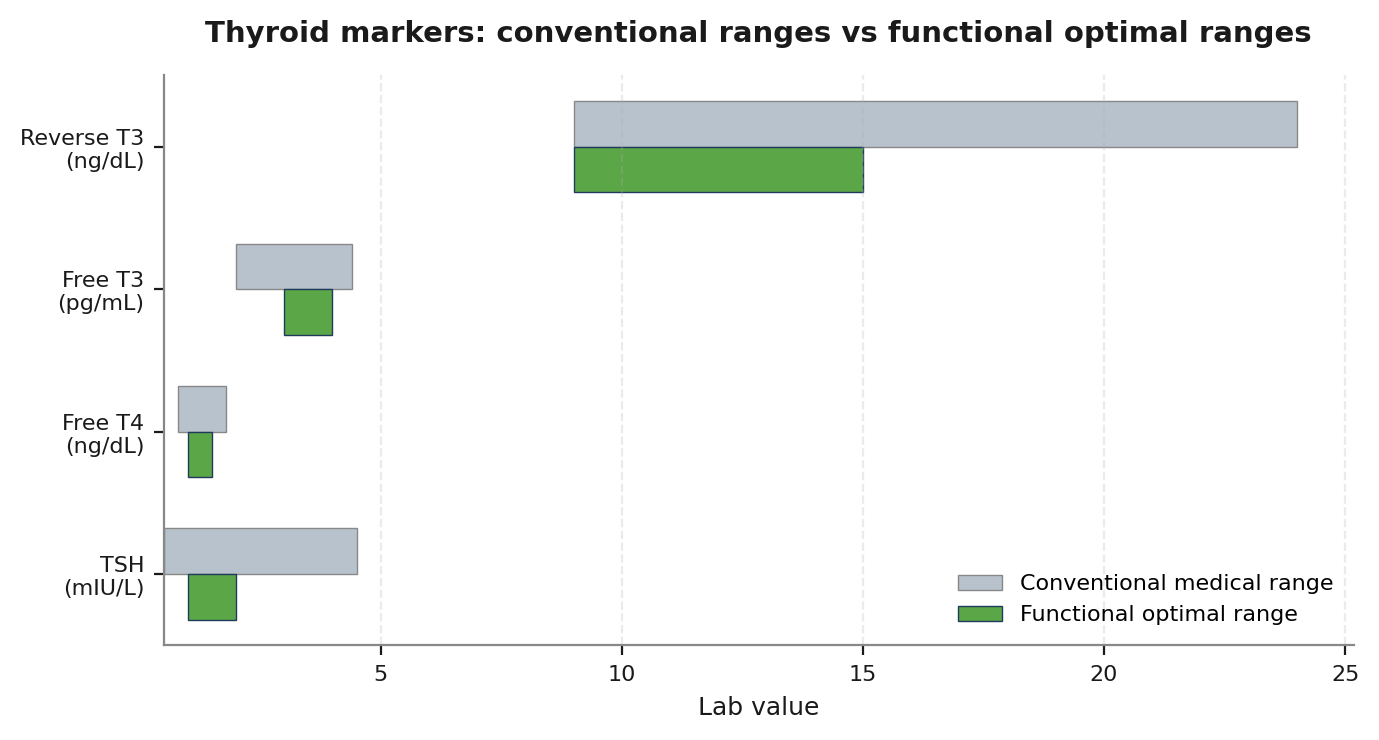
The TSH reference range used by most labs runs roughly 0.5 to 4.5 mIU/L, yet symptoms of low thyroid function often appear well below the upper edge. Cleveland Clinic describes hypothyroidism as a state where the thyroid is not producing enough hormone, with classic symptoms of fatigue, weight gain, cold intolerance, hair changes, and brain fog. The trouble is that those exact symptoms can appear in someone with a TSH of 3.2, which looks normal on paper. Functional ranges narrow the window, which is one reason patients who were told their thyroid was fine often discover it was not.
A patient with anxiety, irregular cycles, and weight gain may leave a conventional visit with three prescriptions, one from each specialist, none of which address why the system is dysregulated in the first place. A functional endocrinologist starts at the why. Is the HPA axis chronically stressed? Is the gut absorbing nutrients? Is blood sugar swinging? Is there autoimmune activity? These questions reframe the symptoms as outputs of a system, not the disease itself.
Hashimoto's thyroiditis is the most common cause of hypothyroidism in iodine-replete countries, with a global prevalence estimated around 7.5 percent and roughly four times higher in women than men, yet thyroid antibodies are often not tested at all in early evaluations. By the time TSH drifts high enough to flag, autoimmune damage has already been happening, sometimes for years. Running TPO and thyroglobulin antibodies alongside the standard panel is a routine part of a functional thyroid workup and frequently changes the entire treatment direction.
One of the clearest illustrations of the difference between conventional and functional endocrinology is the gap between standard lab ranges and the narrower ranges used to assess true optimal function. The table below shows the typical contrast for the most common thyroid markers.
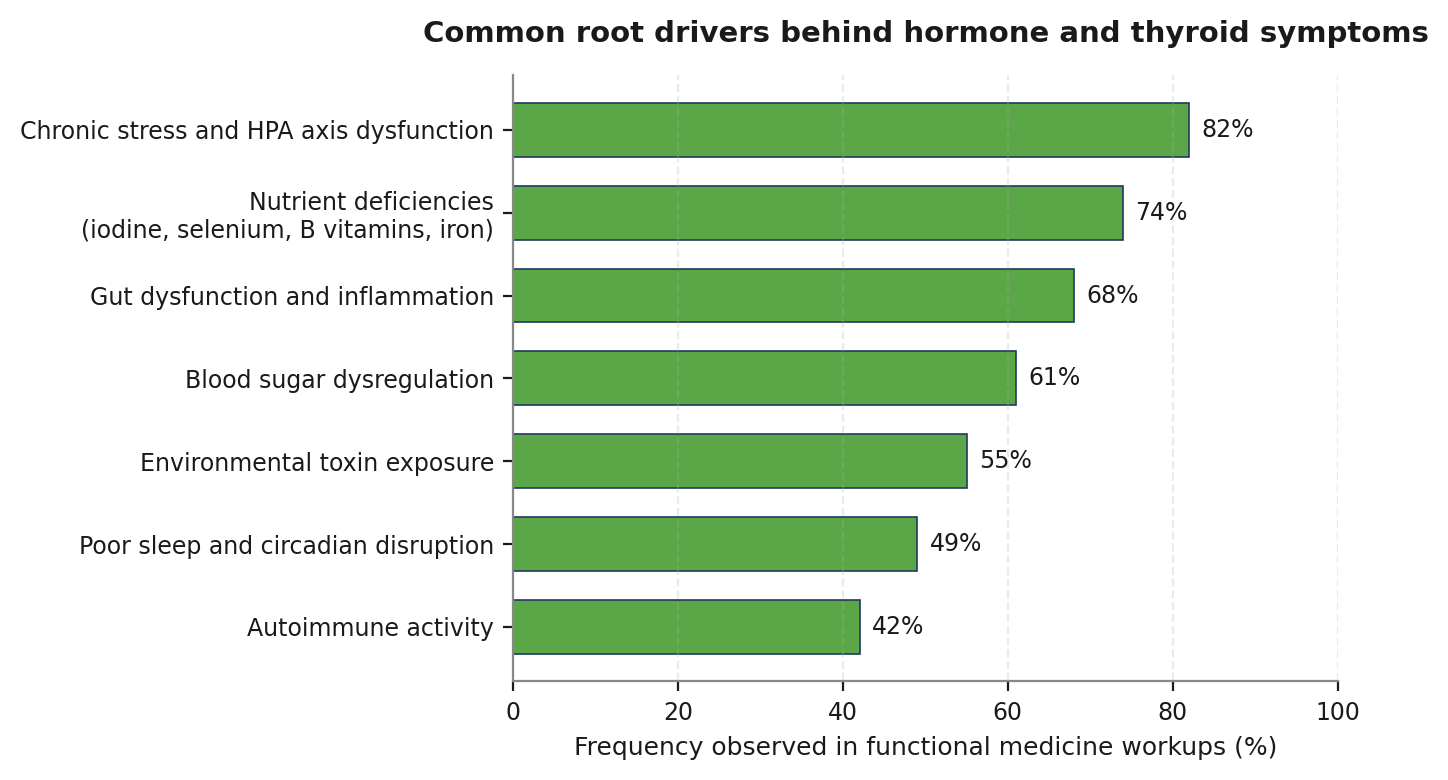
Hormone imbalance is almost never the starting point. It is the downstream signal of one or more upstream drivers that have been building for months or years. A functional endocrinologist works through these systematically. The seven categories below come up again and again in real patient workups.
Cortisol is the body's most important stress hormone, and it does not operate in isolation. When the hypothalamic-pituitary-adrenal (HPA) axis runs hot for too long, thyroid conversion slows, sex hormone production drops, blood sugar destabilizes, and sleep deteriorates. Mayo Clinic notes that true adrenal insufficiency presents with fatigue, weakness, and weight changes, but the more common pattern in functional medicine is suboptimal HPA function, where the system is dysregulated long before it meets disease criteria.
Thyroid hormone production depends on iodine, selenium, zinc, and tyrosine. Adrenal hormone synthesis needs vitamin C, B vitamins, and magnesium. Insulin signaling depends on chromium and magnesium. Female hormone metabolism depends on B6, B12, and methylation cofactors. A nutrient deficiency in any of these can produce hormonal symptoms even when glandular function is intact. Functional workups routinely test ferritin, vitamin D, B12, magnesium, and zinc because deficiencies show up so often.
About 20 percent of T4 to T3 conversion happens in the gut, and gut inflammation, dysbiosis, and intestinal permeability are tightly linked to autoimmune thyroid disease. When the gut is inflamed, the immune system stays activated, and an activated immune system attacks easily provoked tissues, including the thyroid. This is one reason gut testing is often part of a thyroid workup even when digestive symptoms are mild.
Insulin and cortisol are intertwined. Repeated blood sugar swings drive cortisol release, which in turn destabilizes thyroid conversion and sex hormone production. Fasting insulin and hemoglobin A1c are far more sensitive markers of early metabolic dysfunction than fasting glucose alone, and functional endocrinology routinely runs both.
Endocrine-disrupting chemicals such as BPA, phthalates, heavy metals, and certain pesticides interfere with hormone receptors and production. Mold exposure, in particular, has emerged as a significant driver of unexplained fatigue and HPA dysfunction. Targeted testing for these exposures is part of a thorough workup when symptoms do not match the standard pattern.
Cortisol, melatonin, growth hormone, and reproductive hormones all follow circadian rhythms. Chronic short sleep, irregular sleep timing, and late-night light exposure disrupt these rhythms and produce hormone profiles that look pathological on paper. Restoring sleep is one of the most cost-effective interventions in endocrine care.
Hashimoto's is the most common autoimmune thyroid disease, but autoimmune mechanisms can affect adrenals, ovaries, pancreas, and pituitary as well. Once antibodies are detected, the focus shifts toward calming immune activity through gut healing, stress regulation, blood sugar stabilization, and addressing infections or environmental triggers, not only toward replacing the missing hormone.
Knowing the root causes is one thing. Building a workup and care plan that systematically addresses them is what actually moves patients. The functional endocrinologist approach generally has three phases that loop and refine over a typical 4 to 7 month care plan.
Testing replaces guessing. A functional endocrine workup goes beyond TSH and a basic metabolic panel. A first round typically includes a full thyroid panel with antibodies, complete sex hormone profile, fasting insulin and A1c, comprehensive metabolic markers, full nutrient panel, inflammatory markers, and vitamin D. Targeted testing is added based on the clinical picture, which may include GI-MAP stool analysis, DUTCH hormone testing, SIBO testing, mold and mycotoxin testing, food sensitivity testing, or specialized nutritional panels. The point is to see the system clearly before recommending anything.
This is why the advanced lab testing piece of the workup matters so much. Treatment recommendations are only as good as the picture the testing reveals, and broad surface-level panels often miss the actual driver.
Once the testing reveals the root drivers, the care plan is built around the patient's specific findings. Two people walking in with the same fatigue diagnosis can leave with entirely different plans, because the upstream causes are different. A care plan typically combines nutrition guidance based on labs, targeted supplementation to correct deficiencies, lifestyle protocols for sleep and stress, gut healing if indicated, and hormone support where the testing justifies it. Nothing is added that the data does not support.
Hormone systems do not respond on a one-month timeline, and lab values shift as the body recalibrates. A functional care plan tracks symptoms and labs across several months, then refines the plan based on what is working and what is not. This phase is where conventional care often falls short, because a single annual follow-up cannot catch the iterative changes that a recovering endocrine system needs.
Understanding the root cause of complex endocrine symptoms starts with the right testing and a care team that takes the time to listen. Integrative Wellness Centers offers in-person care across Michigan and Zoom consultations for patients in most US states. If you are ready to stop guessing and start getting answers, you can book a consultation with our functional medicine team.
Hormone systems heal on their own timeline, and that timeline is rarely fast. Patients often want a number, which is fair. The honest answer is that meaningful symptom relief typically begins within the first two to three months of consistent care, while deeper system recovery often spans the full 4 to 7 month arc. Antibody levels, gut function, and HPA axis recalibration take longer than energy or mood, which often shift earlier.
The body is designed to be self-healing and self-regulating when the inputs are right. That phrase shows up often in functional medicine for a reason. Most chronic endocrine dysfunction is not the body failing. It is the body adapting to chronic mismatched inputs over years. Remove the drivers, restore the nutrients, calm the immune system, and the system tends to recover function in its own time.
Realistic expectations also matter. Recovery is rarely linear, and old symptoms can flare during transitions before settling. A good thyroid and functional medicine care plan anticipates this and builds in adjustment points. Patients who improve fastest tend to be the ones who follow the protocol consistently, communicate symptoms clearly, and treat the process as a 4 to 7 month conversation with their body rather than a sprint to a normal lab value.
A functional medicine practitioner evaluates the whole hormone network and the upstream drivers that conventional endocrinology often misses, using broader testing, optimal lab ranges, and root-cause care planning. Patients with thyroid, adrenal, blood sugar, or sex hormone symptoms who feel dismissed by standard labs often find traction in a functional setting because the workup is designed to ask why the system is dysregulated, not only whether a single value is technically abnormal.
If you have been searching for answers about chronic hormonal issues and feel like conventional approaches have not gotten to the root cause, you are not alone. Integrative Wellness Centers works with patients in person across Michigan and via Zoom in most US states to identify what is actually driving these sleep issues. You can schedule a new patient consultation to discuss your specific situation with our care team.
These are the questions people most often ask before scheduling a first consultation. They mirror the searches our care team sees patients arriving with, and the answers reflect how we approach these questions in clinic.
1. What is a functional endocrinologist and how do they differ from a traditional endocrinologist?
A functional endocrinologist applies functional medicine principles to the endocrine system, focusing on root causes across the whole hormone network rather than treating a single gland in isolation. A traditional endocrinologist is excellent for clear disease such as type 1 diabetes or pituitary tumors. A functional approach is built for the in-between space where symptoms are real but standard labs look normal.
2. What conditions does a functional endocrinologist help with?
Common areas include thyroid issues such as Hashimoto's, hypothyroidism, and hyperthyroidism, hormonal imbalance including PCOS and perimenopause, adrenal and HPA axis dysfunction, insulin resistance and early type 2 diabetes, and fatigue with no clear conventional explanation. The framework also fits patients with autoimmune patterns affecting multiple systems.
3. What diagnostic tests do functional endocrinologists commonly order?
A typical first round includes a comprehensive thyroid panel with antibodies, full sex hormone profile, fasting insulin and hemoglobin A1c, vitamin D, ferritin, B12, inflammatory markers, and a complete metabolic panel. Targeted add-ons based on symptoms may include GI-MAP stool analysis, DUTCH hormone testing, SIBO testing, food sensitivity testing, or mold and mycotoxin testing.
4. Can a functional endocrinologist provide a personalized thyroid treatment plan?
Yes. Personalization is the core of the model. A functional thyroid plan is built around the specific lab pattern, antibody status, nutrient deficiencies, gut findings, and stress profile of the individual patient. Two patients with the same TSH can receive very different plans because the upstream causes are different.
5. Are there telemedicine options for functional endocrinology?
Yes. Functional endocrine workups translate well to telehealth because they rely heavily on detailed history-taking and comprehensive lab work. Integrative Wellness Centers sees patients in-person across Michigan and via Zoom in most US states, excluding Hawaii, Alaska, New York, Rhode Island, and New Jersey. Lab kits can be sent directly to your home or to a nearby draw site.
6. How do I find a qualified functional endocrinologist near me?
Look for a clinician trained in functional medicine through a credible organization such as the Institute for Functional Medicine, with specific experience in endocrine conditions. Read patient stories that match your concern, ask whether the practice runs advanced lab testing and uses optimal ranges, and confirm telehealth is available if you are not local. A practice that explains its testing approach clearly is usually a good sign.
7. Does insurance cover a functional endocrinologist?
Coverage varies. Many functional medicine practices, including ours, operate outside traditional insurance to preserve the freedom to run the testing and care plans patients actually need. HSA and FSA accounts typically cover services, and lab work can often be billed through your insurance separately. Asking about payment structure during the first call is the cleanest way to know what to expect.
If this article resonated with what you have been going through, the next step is finding out whether functional medicine is the right fit for your situation. Integrative Wellness Centers has supported thousands of patients since 2012, both in-person across Michigan and via Zoom in most US states. You can request a new patient consultation to start the conversation with our care team.
Medical Disclaimer: This article is for informational and educational purposes only. It is not intended as medical advice and should not replace consultation with a qualified healthcare provider. Integrative Wellness Centers makes no claims to diagnose, treat, cure, or prevent any disease. Always consult your doctor before making changes to your health regimen or discontinuing any medication.

Take the online digestive evaluation to instantly discover what systems of your body are the cause of your health issues.
Online Digestive EvaluationTake the TestOnline Female Hormone EvaluationOnline Male Hormone Evaluation


