
Discover evidence-based ways to lower blood sugar naturally for prediabetes and type 2 diabetes using a functional medicine approach.
Managing blood sugar is one of the most important foundations of long-term health. Whether you have prediabetes, type 2 diabetes, or are simply concerned about insulin resistance, learning how to lower blood sugar naturally can significantly reduce the risk of complications and improve daily energy, focus, and well-being.
At Integrative Wellness Centers in Michigan, we take a functional and holistic approach to diabetes treatment. Rather than focusing only on numbers or medications, functional medicine doctor looks at why blood sugar becomes imbalanced in the first place and how lifestyle, nutrition, hormones, gut health, inflammation, and stress all play a role.
This guide explores 10 evidence-based, natural ways to lower blood sugar, grounded in functional medicine principles and supported by research. These strategies are designed to complement medical care and should always be personalized with professional guidance.
Read more Endocrinologist: What They Do, Conditions Treated, and When to See One
Chronically elevated blood sugar does more than increase diabetes risk. It contributes to inflammation, hormone imbalance, digestive problems, cardiovascular disease, and autoimmune conditions.
Functional medicine views diabetes as a metabolic imbalance, not just a glucose issue. Blood sugar dysregulation is often connected to insulin resistance, gut health issues, chronic stress, sleep deprivation, and nutrient deficiencies. Addressing these root causes allows the body to restore balance naturally and sustainably.
Read more Why Women Are More Prone to Chronic Inflammation & How to Manage It
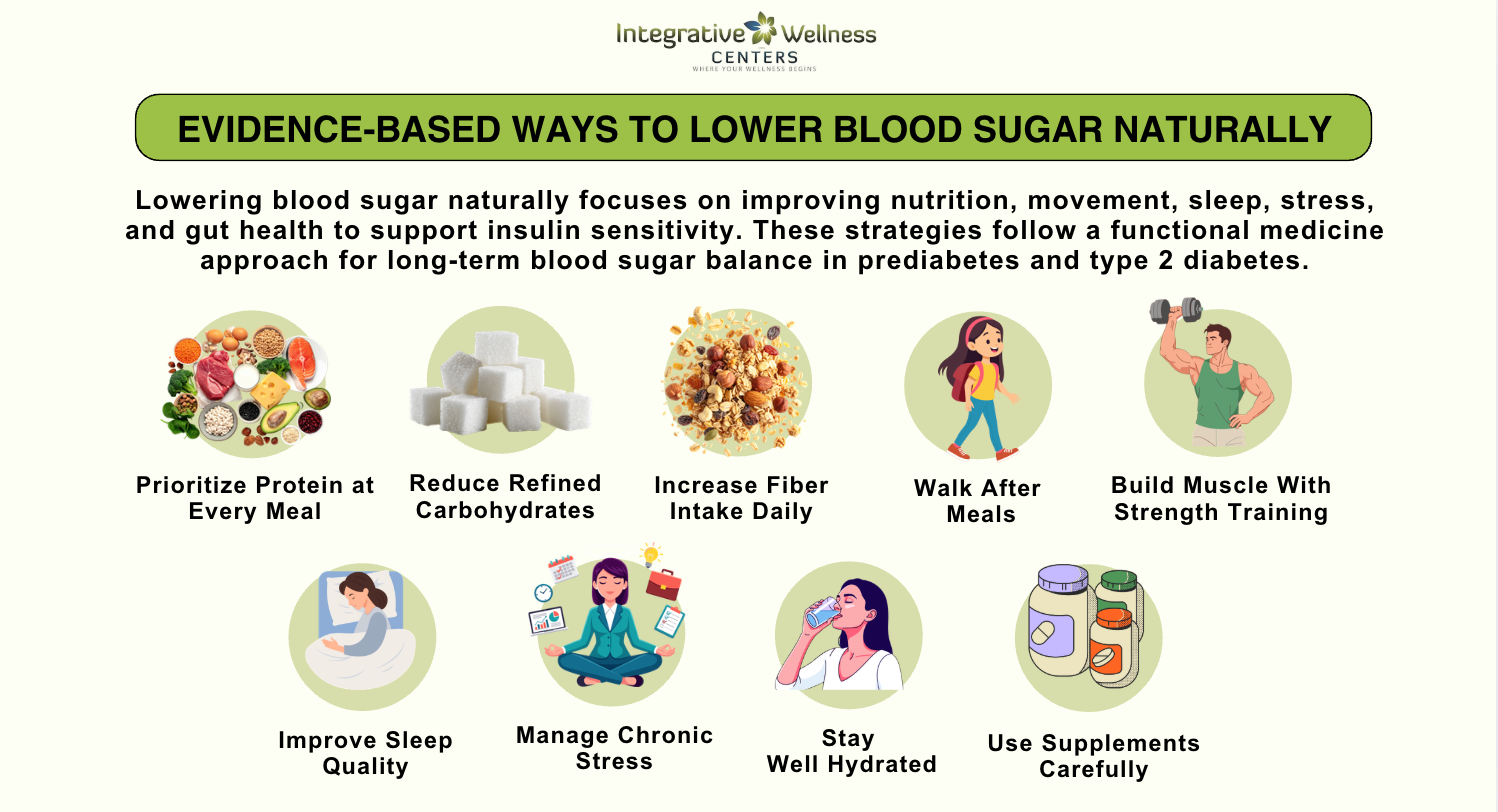
Lowering blood sugar naturally involves addressing the key lifestyle and metabolic factors that influence how the body processes glucose. Research shows that consistent improvements in nutrition, movement, sleep, stress management, and gut health can significantly enhance insulin sensitivity and reduce blood sugar fluctuations over time.
These strategies follow a functional medicine approach that supports long-term blood sugar balance for people with prediabetes and type 2 diabetes.
Protein slows glucose absorption and improves insulin sensitivity. Starting meals with protein helps reduce post-meal blood sugar spikes, especially for people with type 2 diabetes.
Good options include eggs, wild-caught fish, grass-fed meats, legumes, and organic tofu.
Refined carbs and sugar-sweetened foods cause rapid glucose spikes. Replacing them with whole-food carbohydrates such as vegetables, legumes, and low-glycemic fruits supports steadier blood sugar levels.
Fiber slows digestion and reduces glucose absorption. Soluble fiber, in particular, improves insulin sensitivity and supports gut health. High-fiber foods include chia seeds, flaxseeds, oats, lentils, beans, and leafy greens.
Gut health is deeply connected to blood sugar regulation. If you struggle with bloating or irregular digestion, explore our page on Digestive Issues
A short 10 to 20-minute walk after eating significantly reduces post-meal blood sugar levels. Movement helps muscles absorb glucose without requiring insulin.
Resistance training improves insulin sensitivity and glucose uptake. Even two to three sessions per week can lower fasting blood sugar and A1C levels.
Poor sleep increases insulin resistance and hunger hormones. Aim for 7 to 9 hours of quality sleep per night and maintain consistent sleep schedules.
Stress hormones like cortisol raise blood sugar levels. Mindfulness, breathwork, yoga, and nervous system regulation are essential tools in functional medicine diabetes care.
Hormonal dysregulation often overlaps with blood sugar problems. Learn more about Hormonal Imbalance
Dehydration increases blood sugar concentration. Drinking enough water supports kidney function and glucose clearance from the bloodstream.
Certain supplements may support blood sugar balance when used under professional supervision, including berberine, soluble fiber, and magnesium. Always consult a practitioner, especially if you are on diabetes medication, to avoid interactions.
Schedule an online consultation with our functional medicine doctor
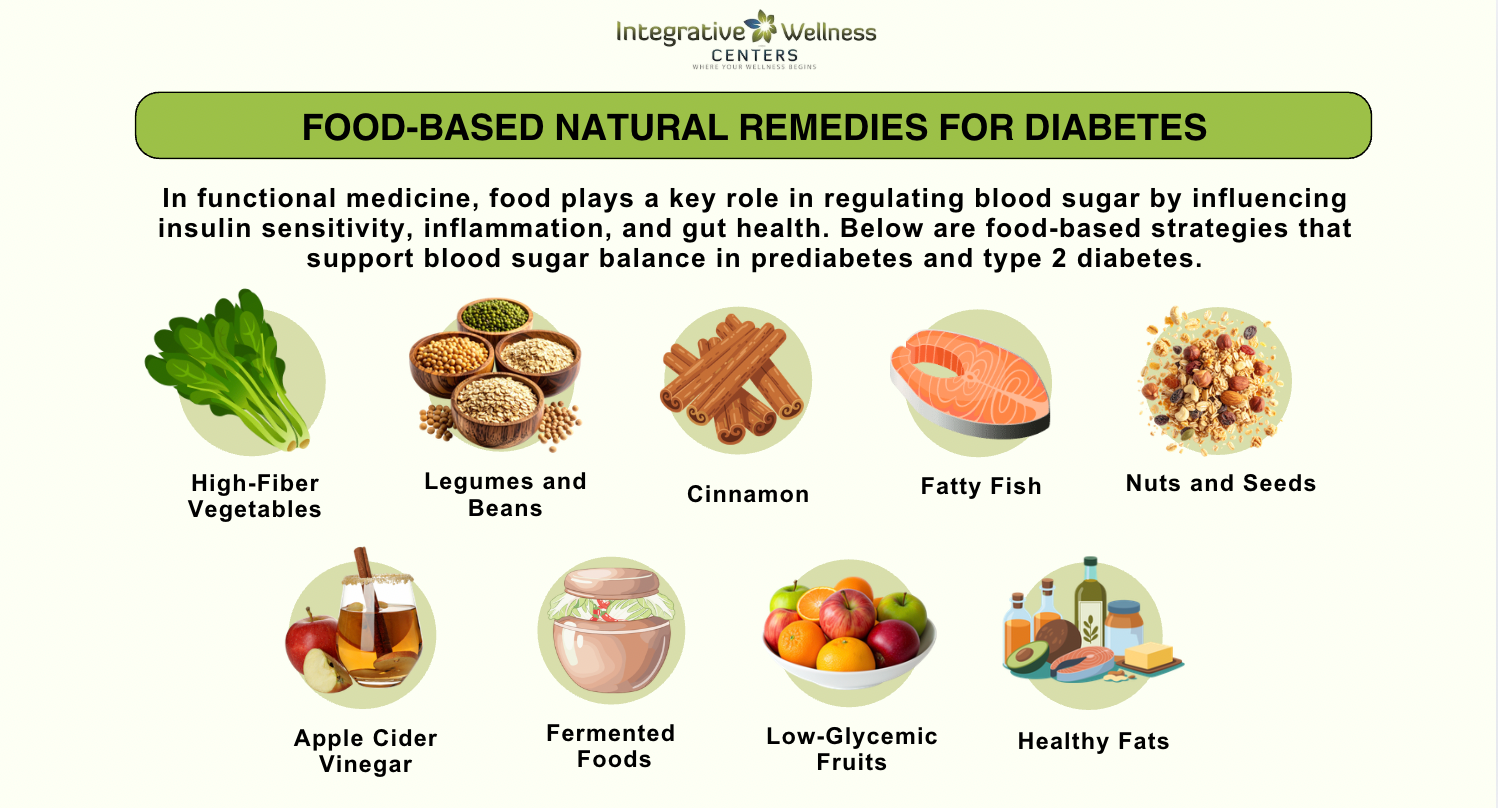
In functional and integrative medicine, food is not just fuel. Food is information. The foods you eat daily send powerful signals that influence insulin sensitivity, inflammation, gut health, and blood sugar regulation.
Rather than focusing on restriction alone, functional medicine emphasizes strategic food choices that help lower blood sugar naturally while nourishing the body.
Below are 9 food-based natural remedies that support blood sugar balance for people with prediabetes and type 2 diabetes.
Non-starchy vegetables slow glucose absorption and improve insulin sensitivity. Their fiber content also supports gut health and reduces inflammation. Examples include leafy greens, broccoli, cauliflower, zucchini, cucumber, and cabbage. These foods form the foundation of a functional medicine diabetes diet.
Beans and lentils are rich in fiber and plant-based protein, which slow digestion and improve post-meal blood sugar response. They also support gut microbiome diversity, a key factor in metabolic health.
Cinnamon is one of the most studied spices for blood sugar regulation. It may help improve insulin sensitivity and reduce fasting glucose when used consistently as part of a balanced diet. Sprinkling cinnamon into oatmeal, smoothies, or yogurt is an easy way to incorporate it.
Fatty fish provide omega-3 fatty acids, which reduce inflammation and support insulin sensitivity. Salmon, sardines, mackerel, and anchovies are excellent choices for people managing diabetes naturally.
Nuts and seeds provide healthy fats, fiber, and minerals that help stabilize blood sugar levels. Almonds, walnuts, chia seeds, flaxseeds, and pumpkin seeds are particularly supportive when eaten in moderate portions.
Consuming diluted apple cider vinegar before meals may help reduce post-meal glucose spikes by improving insulin sensitivity and slowing gastric emptying. This strategy works best when combined with balanced meals rather than high-sugar foods.
Fermented foods support gut health, which plays a critical role in glucose metabolism. Foods such as yogurt, kefir, kimchi, sauerkraut, and miso introduce beneficial bacteria that help regulate inflammation and insulin response.
Certain fruits can be included safely in a diabetes-friendly diet when eaten whole and in appropriate portions. Berries, apples, pears, and citrus fruits provide fiber and antioxidants without excessive sugar load.
Healthy fats slow carbohydrate absorption and improve satiety, reducing blood sugar fluctuations. Olive oil, avocado, coconut oil, and grass-fed butter can support stable glucose levels when used mindfully.
Lowering blood sugar naturally requires a comprehensive, food-first approach that supports insulin sensitivity, gut health, hormone balance, and inflammation control.
Evidence shows that prioritizing high-fiber vegetables, whole grains, legumes, low-glycemic fruits, protein-rich foods, healthy fats, nuts, seeds, and fatty fish can help stabilize glucose levels, while functional ingredients such as cinnamon, apple cider vinegar, fermented foods, and bitter melon may further support metabolic balance.
When combined with regular physical activity, adequate sleep, stress management, and personalized functional medicine care, these natural strategies can play a meaningful role in managing prediabetes and type 2 diabetes safely and sustainably.
Read more Best Diabetes Doctor in Michigan for Personalized Holistic Care
Lowering blood sugar naturally works best when nutrition, movement, sleep, stress management, and gut health are addressed together. A functional medicine approach focuses on balanced meals with protein and fiber, regular physical activity, quality sleep, stress reduction, and personalized care to support blood sugar balance in prediabetes and type 2 diabetes.
Yes. Lifestyle changes including diet, movement, stress management, and sleep significantly improve blood sugar control when done consistently.
Protein, fiber-rich vegetables, and healthy fats help stabilize glucose levels more effectively than refined carbohydrates.
Some improvements can be seen within days, while A1C changes typically take 8 to 12 weeks.
Functional medicine addresses root causes like insulin resistance, inflammation, and hormone imbalance, making it a powerful complementary approach.
No. Supplements may support blood sugar control but should never replace prescribed medications without medical supervision.
Walking after meals and resistance training are among the most effective strategies.
Rice can raise blood sugar, especially white rice, because it is digested quickly and can cause glucose spikes. Whole-grain options like brown or black rice tend to have a milder effect, particularly when eaten in moderate portions and paired with protein, healthy fats, and fiber.
Yes. Gut imbalance is linked to insulin resistance and inflammation.
A protein-rich breakfast with fiber and healthy fats helps prevent morning glucose spikes.
If standard care is not improving symptoms or you want a root-cause approach, functional medicine can help. Begin your personalized functional medicine consultation with our doctor at Integrative Wellness Centers. Schedule now!

Take the online digestive evaluation to instantly discover what systems of your body are the cause of your health issues.
Online Digestive EvaluationTake the TestOnline Female Hormone EvaluationOnline Male Hormone Evaluation


