
Learn what a functional medicine doctor does, how functional medicine works, conditions treated, costs, insurance, and how to find the best doctor in Michigan.
Functional medicine has gained significant attention as more people search for personalized, root-cause healthcare solutions. If you are exploring integrative or holistic care, you may be wondering what a functional medicine doctor does, how functional medicine works, and whether it is right for your health needs.
This article is a complete guide to understanding functional medicine doctors. It explains what functional medicine is, what a functional medicine doctor does, how this approach works, and when it may be helpful.
Read more about Why Choose Functional Medicine Doctor
A functional medicine doctor is a licensed healthcare professional who focuses on identifying and addressing the underlying causes of illness rather than treating symptoms alone. Using a systems-based approach, functional medicine considers how factors such as genetics, nutrition, lifestyle, environment, hormones, gut health, and inflammation interact to affect overall health.
Instead of viewing conditions in isolation, functional medicine sees the body as an interconnected system. This perspective allows doctors to develop highly personalized care plans tailored to each individual’s biology and health history. By looking beyond symptoms and understanding how different systems influence one another, functional medicine supports more targeted, root-cause-focused care designed around the patient’s unique health story.
Read more the best functional medicine doctor in Michigan
A functional medicine doctor spends time understanding the full picture of a patient’s health. This includes reviewing medical history, lifestyle habits, nutrition, stress levels, sleep patterns, environmental exposures, and past treatments. The goal is not quick fixes, but sustainable health improvements. Functional medicine doctors often:
Functional medicine doctors commonly work with patients who have chronic, complex, or recurring health concerns that may not fully improve with conventional care alone. Rather than treating a single diagnosis in isolation, functional medicine focuses on identifying patterns and underlying imbalances that contribute to ongoing symptoms.
Common conditions supported through functional medicine include digestive disorders such as
Many patients also seek care for persistent fatigue, brain fog, metabolic concerns, chronic inflammation, cardiometabolic risk factors, and immune dysfunction. Functional medicine is especially well suited for preventive care and long-term health optimization, though it does not replace emergency or acute medical treatment.
Read more 10 Health Conditions Functional Medicine Doctors Commonly Treat
The functional medicine approach focuses on identifying why a condition developed and what is driving ongoing symptoms. Instead of asking “What medication treats this disease?”, functional medicine asks “Why is this happening in this body?”
This approach emphasizes:
Functional medicine is often used alongside conventional care, not in opposition to it.
Read more about Functional Medicine vs. Conventional Medicine
Many chronic conditions are complex and multifactorial. Patients often feel frustrated when symptoms persist despite normal test results or standard treatments.
Functional medicine addresses gaps in conventional care by:
This approach is especially valuable for patients with chronic or recurring health issues.
Functional medicine testing focuses on identifying underlying imbalances that may contribute to symptoms, rather than looking only at disease markers. These tests often go beyond standard lab work to assess how different systems in the body are functioning, including digestion, hormones, metabolism, inflammation, nutrient status, and immune response.
Instead of asking whether a value is simply “normal,” functional medicine testing looks at patterns and trends that may signal early dysfunction. This helps guide personalized treatment plans tailored to each individual’s biology and health goals.
Learn more about how this approach works on our page about functional medicine testing
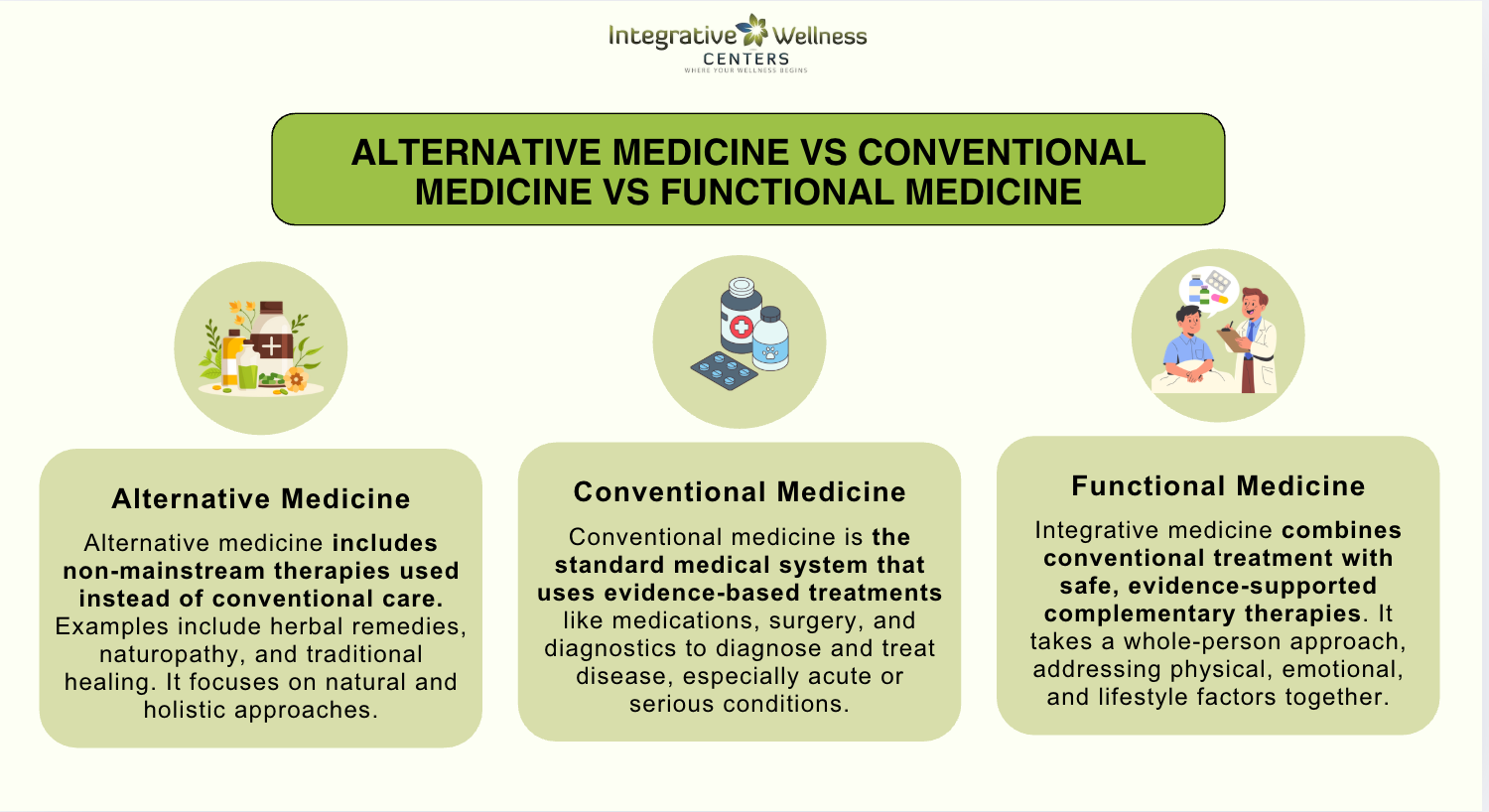
Functional medicine differs from conventional medicine in how it approaches diagnosis, treatment, and long-term care. A regular doctor often focuses on diagnosing a specific condition and managing symptoms, usually through medication or standardized treatment protocols. While this approach is essential for acute care and emergencies, it may not fully address why a condition developed in the first place.
Functional medicine takes a root-cause approach. Instead of asking only “What disease is present?”, a functional medicine doctor asks “Why is this happening in this body?”. This involves longer appointments, deeper health history reviews, advanced testing, and personalized treatment plans that address nutrition, lifestyle, gut health, hormones, inflammation, and environmental factors. The goal is not just symptom relief, but restoring balance and supporting long-term health.
To become a functional medicine doctor, practitioners typically earn a licensed healthcare degree, gain hands-on clinical experience, complete specialized functional medicine training programs, and continue their education through ongoing coursework and certifications to stay current with best practices.
Learn more about a detailed comparison between functional medicine and conventional medicine
When looking for a functional medicine doctor in Michigan, it is important to understand that not all clinics practice functional medicine in the same way. Functional medicine should involve longer visits, a thorough review of your health history, and a focus on identifying root causes rather than offering quick or generic solutions. A good functional medicine doctor takes time to understand nutrition, lifestyle, stress, gut health, hormones, and how these factors interact in your body.
When choosing a clinic or doctor, look for licensed practitioners with formal functional medicine training, clear communication, reasonable access to follow-up care, and a personalized approach to treatment. Functional medicine works best when the doctor views health as an ongoing process and works with you over time, adjusting care as your body responds.
At Integrative Wellness Centers, patients across Michigan receive functional and integrative care focused on long-term health rather than short-term symptom management. We also offer online consultations for patients who prefer virtual care. Schedule an appointment here: https://www.iwcenters.com/schedule-new-patient-appointment
Functional medicine offers clear benefits for people looking for deeper, more personalized healthcare. Instead of focusing only on symptom control, functional medicine helps identify underlying contributors such as nutrition gaps, gut imbalance, hormone dysfunction, chronic inflammation, and lifestyle stressors that affect overall health. This approach allows care to be tailored to your unique biology rather than relying on one-size-fits-all treatments.
By working with a functional medicine doctor, patients often benefit from longer appointments, comprehensive testing, personalized treatment plans, and ongoing support over time.
Functional medicine is especially helpful for chronic or recurring health concerns, prevention-focused care, and individuals who want to take an active role in their long-term health. At Integrative Wellness Centers, this root-cause, patient-centered approach is designed to support lasting improvements rather than temporary symptom relief.
No. Functional medicine is designed to complement conventional primary care. It works best alongside standard medical services, especially for prevention, chronic care, and long-term health optimization.
Functional medicine is considered safe when provided by licensed healthcare professionals who practice within their scope and use evidence-based testing and treatment strategies.
The best functional medicine doctor is one who aligns with your health goals, communicates clearly, and takes a personalized, systems-based approach. Experience, training, and the ability to provide ongoing follow-up care are more important than location alone.
Insurance coverage varies. Some functional medicine services may be reimbursed depending on your insurance plan, provider credentials, and testing used. Many practices operate on a self-pay or hybrid model.
Costs depend on consultation length, testing, and treatment complexity. Initial visits are often longer than standard medical appointments and may cost more due to the depth of evaluation involved.
Functional medicine assessment looks beyond standard lab ranges to identify patterns, trends, and early dysfunction. This may include comprehensive blood work, nutrient testing, hormone evaluation, gut and microbiome testing, and inflammation or immune markers to guide targeted care.
Functional medicine is a care model rather than a medical degree. Licensed professionals who may practice functional medicine include MDs, DOs, nurse practitioners, physician assistants, chiropractors, and naturopathic doctors, all within their licensed scope.
Some functional medicine doctors are MDs or DOs, while others come from different licensed healthcare backgrounds. Training, clinical experience, and functional medicine education are key factors to consider.
Functional medicine doctors are licensed healthcare professionals. Functional medicine is recognized as a patient-centered approach that focuses on identifying underlying causes of illness rather than treating symptoms alone.
Yes. If the practitioner holds prescribing authority within their license, such as MDs, DOs, and nurse practitioners, they can prescribe medication when appropriate. Medications are typically used alongside lifestyle and root-cause-focused care.

Take the online digestive evaluation to instantly discover what systems of your body are the cause of your health issues.
Online Digestive EvaluationTake the TestOnline Female Hormone EvaluationOnline Male Hormone Evaluation


